
Umar Hakim-Dey My Brother, Friend, and Humanitarian

Imam Hanafi Shakur • October 14, 2025

A Personal Reflection of My Brother

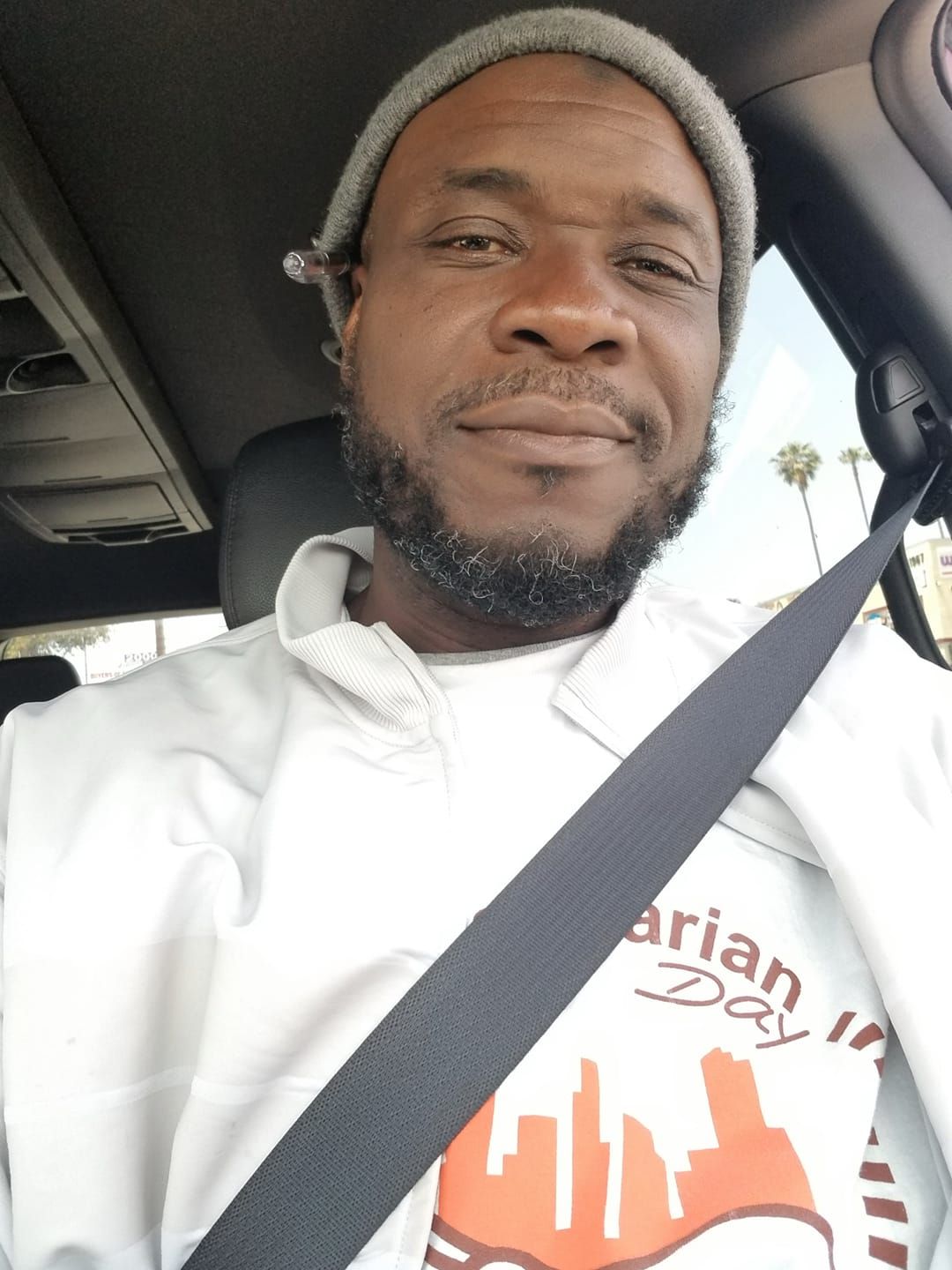
Man in a car, wearing a light-colored sweatshirt and beanie. He has a beard and is looking at the camera.

Islam gives you a very clear perspective about death and dying, however this is an extremely difficult one. It reminds me of what Prophet Muhammad said when his last son Ibrahim returned to Allah, “The eyes will shed tears, the heart will grieve, but the tongue will never question its Lord.” Umar was my brother, my friend, and co-worker. He was also a servant of Allah, a humanitarian, a student of knowledge, a committed son, father, husband, and family man.


Umar was the kind of brother that would give you the shirt off his back. He was the kind of brother to make sure women got to their cars after events, cut his neighbors grass, feed stray cats in the neighborhood, and walk the streets of Compton greeting everyone he encountered. Umar and I originally connected because we both were from the great city of Compton, The Hub City. One of the most fascinating things about Umar, no matter where he was, whose company he was in, he remained Compton. He wore his Levi’s, his Puma tennis shoes, and his signature beanie. He was unapologetically Compton. He was a man of the people, if someone encountered Umar, he for sure left a lasting impression on them with his baritone voice, soft heart, and Compton swag.

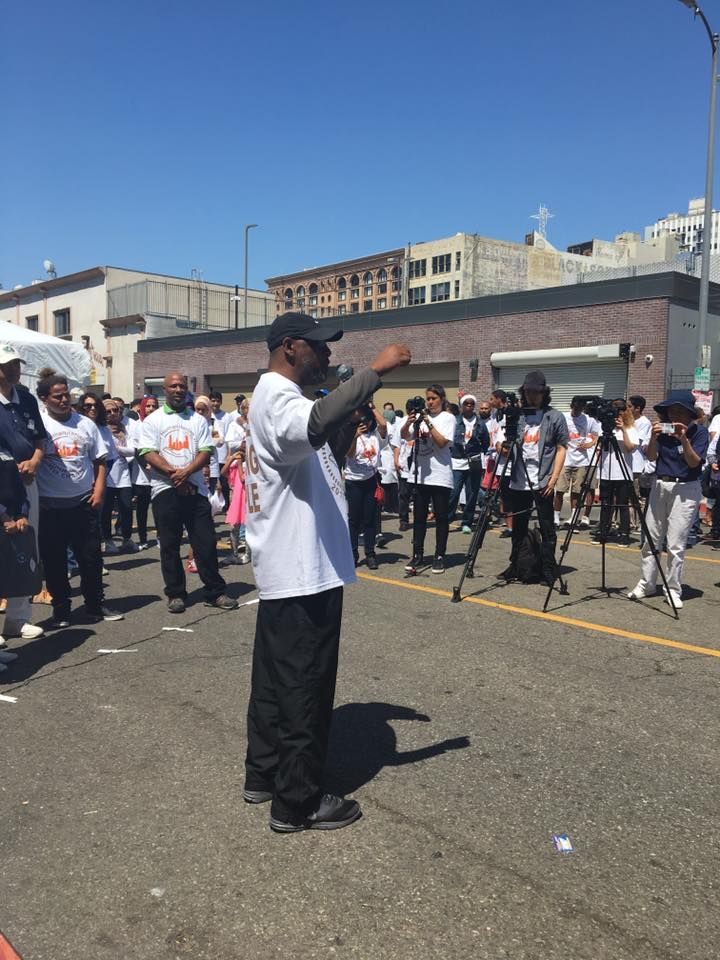
Man speaking to a crowd on a city street; crowd wears white shirts.

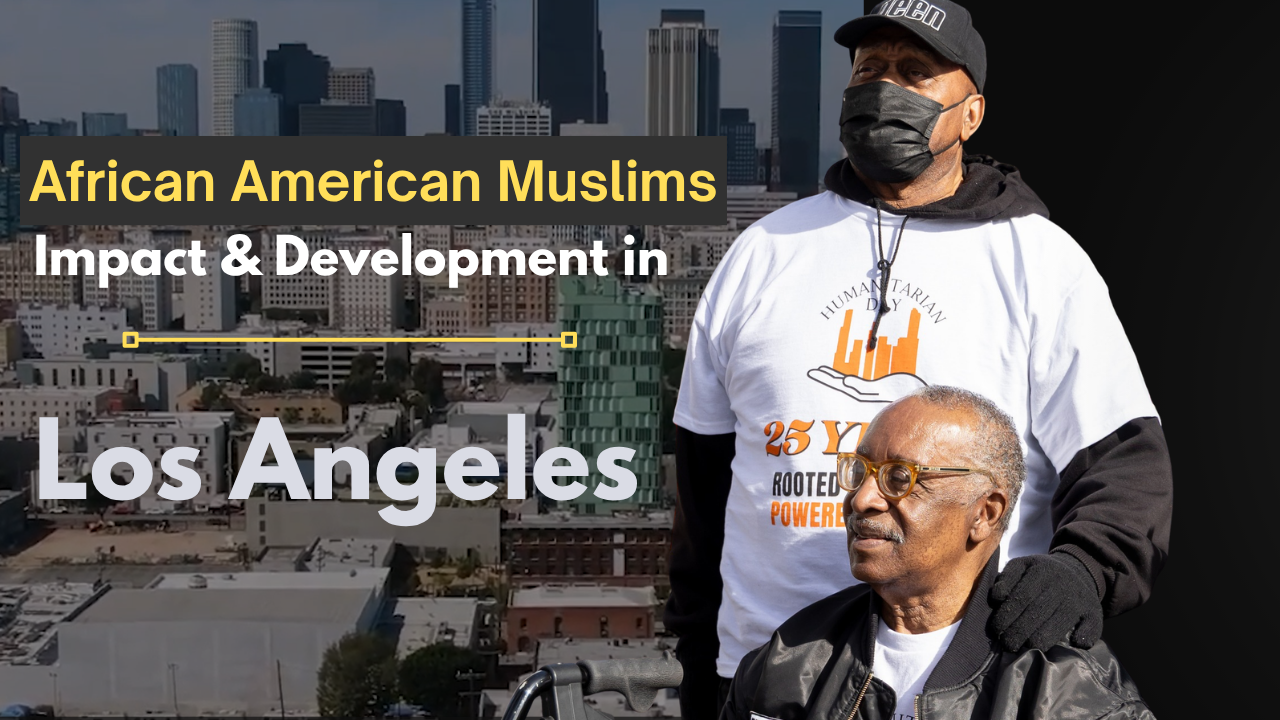
As one of the founders of the ILM Foundation and Humanitarian Day, I am internally grateful to Umar for helping the mission of the Foundation continue after Naim and I moved away from Los Angeles. Umar was a major part of the ILM Foundation for close to 20 years. He began as a volunteer passing out flyers which later evolved in 2012, when he was appointed the Executive Director of the foundation. He continued the vision of the foundation’s founders by working for unity, justice, and community service. He was our Executive Director for ten very productive years before establishing his own social entrepreneurial vision with Inkerij. With Inkerij Umar attempted to address solutions to poverty, inequalities, and environmental issues by collaborating with people and organizations that also pursue meaningful change. Umar was concerned about humanity. 

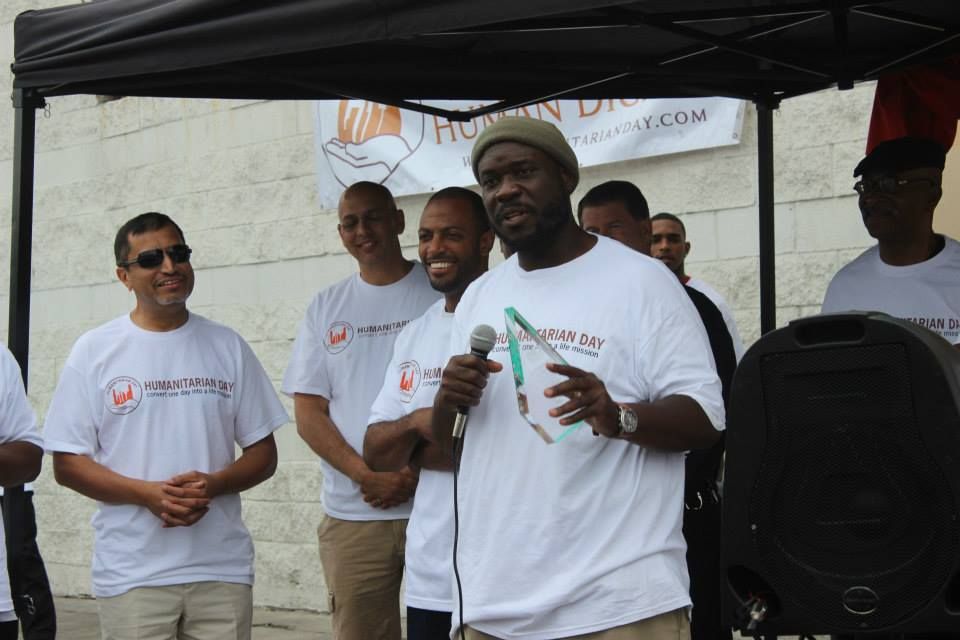
Man speaking into microphone, other men in white shirts stand behind him, outdoor event.

I’m going to miss our motivational song ‘Ante Up’, I’m going to miss our calls that began with As Salaamu Alaykum kid, and my airport pick-ups when I traveled to Los Angeles. My last trip to LA was the weekend of August 9, Umar picked me up, we went to breakfast which he wouldn’t let me pay for, as always, we visited Papa Shah, got to the Masjid early, he made sure I was able to get a bean pie, sold me some face cleanser and lotion that his wonderful wife makes, then dropped me off at my hotel. During the ride, I shared a story with him about our teacher and Imam, Imam Saadiq Saafir. The story was about Imam Saadiq having a stroke while giving a khutbah and not stopping. Later I asked Imam Saadiq about what he was thinking during the episode and he said, “If I was going to die, this is what I was going to die doing.” Umar became silent for a minute. My brother, our brother died working in the cause of Allah. His life so fittingly exudes the ayah in Quran 17:80, which Umar would quote often, “My Lord! Grant me an honorable entrance and an honorable exit and give me a supporting authority from yourself.”

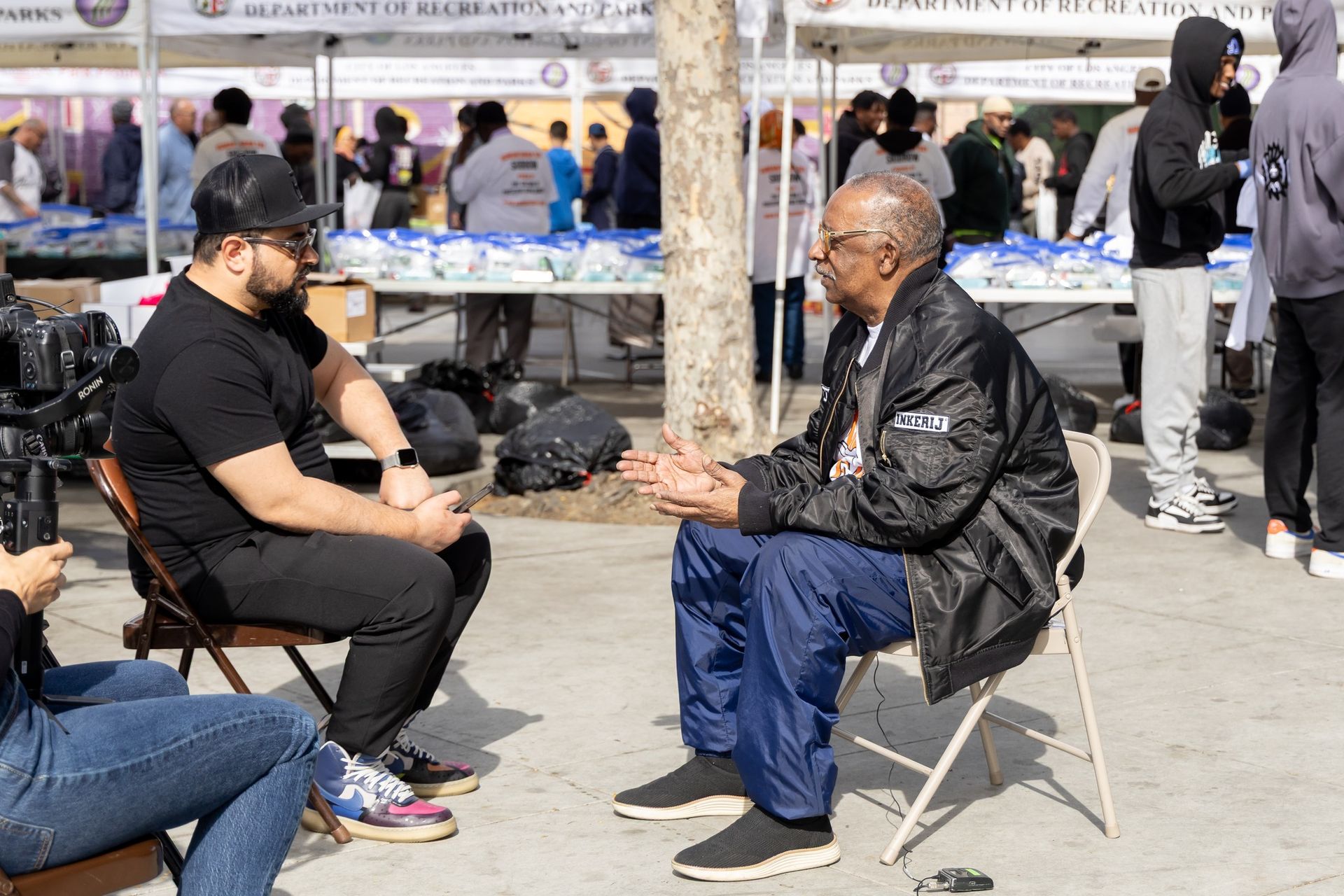
Two men seated, conversing outdoors at an event with tents and people in the background.

I am so thankful to Allah that as I got out of his car that evening, I got a chance to tell Umar that I loved him and was able to hear his reply. On behalf of Imam Saadiq Saafir above with his Inkerij jacket, Naim Shah Jr., myself, and ILM Foundation staff,  we pray that Allah forgives his sins and grants him a spacious abode in Jannah.


As Salaamu Alaykum Kid!!!!
 

Orange

At ILM Foundation, we believe in nourishing bodies and minds. Together, we can create an interconnected community where everyone thrives!

By ILM Foundation May 10, 2026
Perseverance to Purpose: Honoring Imam Dr. Rushdan Mustafa Mujahid-Deen His quiet unshakable connection to faith, sacrifice, commitment to service, and personal development. A respected voice in chaplaincy and community service, Imam Rushdan has reached a major milestone earning his Doctor of Ministry (DMin) in Islamic Leadership from Bayan Islamic Graduate School . This achievement is a story of resilience, discipline, and deep spiritual conviction. A Journey Forged Through Struggle and Fait h Balancing two jobs, enduring personal and external challenges, and pushing through moments of doubt, Imam Rushdan remained steadfast. He describes long nights, relentless effort, and a test of patience that would have caused many to step away. At one critical moment , he faced a major setback, not passing his oral defense. For many, this could have marked the end. But not for him, with humility, he returned to his work. He revisited his thesis, leaned on the support of trusted friends, and anchored himself in faith. When he came back to defend his work again, he excelled. "That man can have nothing but what he strives for; That (the fruit of) his striving will soon come in sight.." Quran Chapter 53:39-40
By Naim Shah Jr May 1, 2026
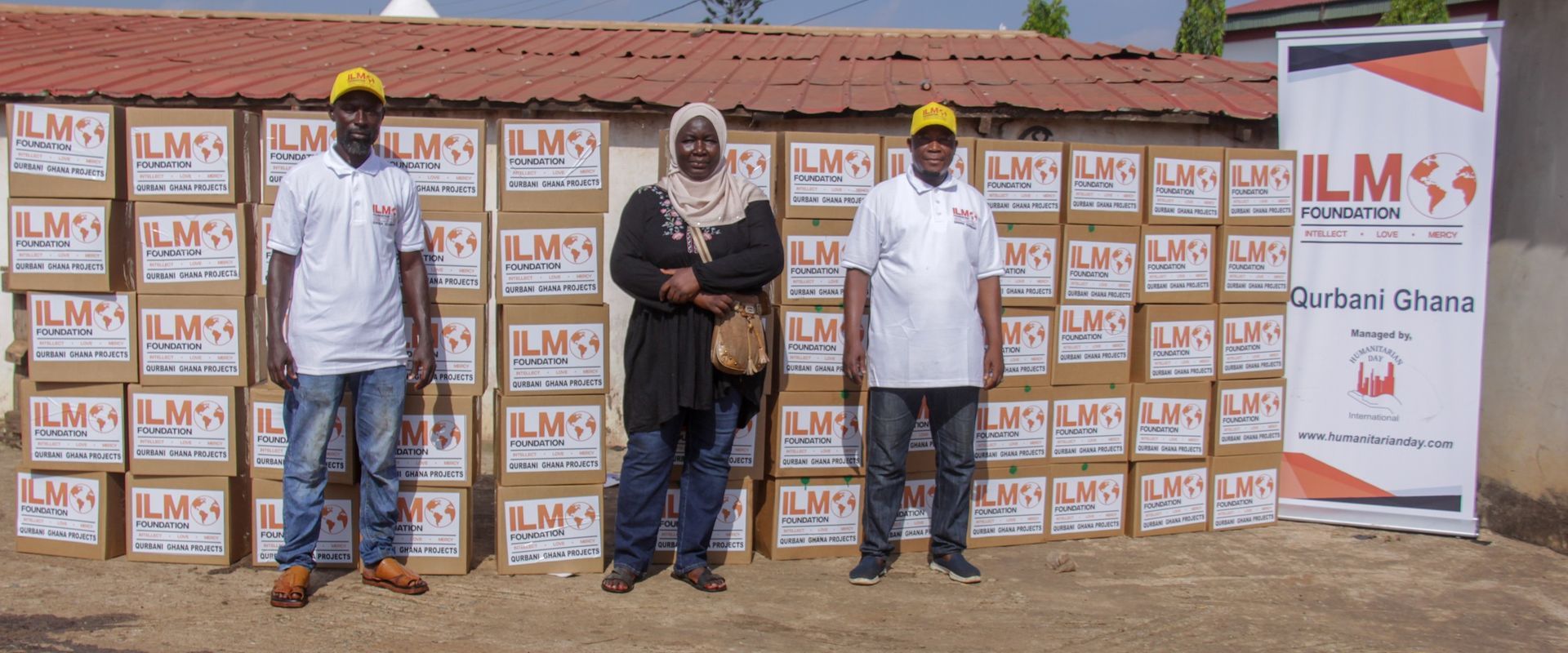
Eid al-Adha & Udhiyah (Qurbani) Guidebook of a Sacred Tradition of Sacrifice, Service, and Compassion Each year, Muslims around the world come together in a powerful expression of faith, generosity, and remembrance for Eid al-Adha, the Festival of Sacrifice. As ILM Foundation prepares for another impactful Qurbani season, this e-guidebook answers the most important questions while inviting you to be part of something deeply meaningful. What is the difference Udhiyah and Qurbani? Udhiyah is the classical Arabic term used in Islamic texts and across the Middle East. It translates to "blood sacrifice" and is derived from Duha (the mid-morning hours when the slaughter occurs). Qurbani is predominantly used in South Asian communities and in Urdu and Persian languages. It is derived from the Arabic word Qurban, which means "to draw near" or "closeness" to Allah. What is Eid al-Adha? Eid al-Adha is one of the two major Islamic holidays, commemorating the unwavering devotion of the Prophet Ibrahim (Abraham). He was tested by God to sacrifice his son, and in his complete submission, he prepared to do so only for God to replace his son with a ram at the last moment. "And when he reached the age of striving alongside him, he said: 'O my dear son, I see in a dream that I am sacrificing you so look, what do you think?' He said: 'O my father, do what you are commanded. You will find me, if Allah wills, among the steadfast……' Quran 37:102 - 107 How is Eid al-Adha celebrated? Eid begins with a special congregational prayer, followed by a sermon. Families gather, meals are shared, and communities come alive with gratitude and generosity. But at the heart of Eid al-Adha is Qurbani, the ritual sacrifice of an animal, symbolizing devotion to God and compassion for others. The importance of the Eid prayer and the sacrifice that follows it is established in the Quran, "Indeed, We have granted you al-Kawthar. So pray to your Lord and sacrifice." Quran 103:1-2 What date is Eid al-Adha 2026? In 2026, Eid al-Adha is expected to begin on Tuesday, May 26, 2026, depending on the sighting of the moon. How many days is Eid al-Adha? Eid al-Adha spans 3 to 4 days, beginning on the 10th day of Dhul Hijjah (the final month of the Islamic calendar) and continuing through the Days of Tashreeq. When does Eid al-Adha end? Eid al-Adha concludes on the 13th of Dhul Hijjah, marking the end of the Days of Tashreeq. Donate Here for your Qurbani
By ILM Foundation April 29, 2026
The Profound Outcome of the Total Submission Qurbani is an act of worship of sacrificing an animal most commonly like a cow, sheep or goat; re-enacting the Sacrifice of Prophet Ibrahim (as) and his Son Prophet Ishmail (as). Eid Al Adha is referred to as Eid Al Akbar (The Big Celebration). ILM Foundation’s aim in this blog is to share some principles associated with this rich tradition and the deep blessings attached to it. Qurbani (قُرْبَانِ) means to draw near. Prophet Ibrahim and his son demonstrate a Divine Master’s Class chronicled in the Quran of Qurbani in practice. Qurbani in the Quran فَلَمَّا بَلَغَ مَعَهُ ٱلسَّعْىَ قَالَ يَـٰبُنَىَّ إِنِّىٓ أَرَىٰ فِى ٱلْمَنَامِ أَنِّىٓ أَذْبَحُكَ فَٱنظُرْ مَاذَا تَرَىٰ ۚ قَالَ يَـٰٓأَبَتِ ٱفْعَلْ مَا تُؤْمَرُ ۖ سَتَجِدُنِىٓ إِن شَآءَ ٱللَّهُ مِنَ ٱلصَّـٰبِرِينَ And when he reached the age of striving alongside him, he said: 'My son I see in a dream that I am slaughtering you. So, tell me, what do you see?' He said: 'My father do what you have been commanded. You will find me, if Allah wills, among the steadfast."
Show More