Qurbani Guidebook of a Sacred Tradition of Sacrifice

Naim Shah Jr • May 1, 2026

Eid al-Adha & Qurbani

Guidebook of a Sacred Tradition of Sacrifice, Service, and Compassion

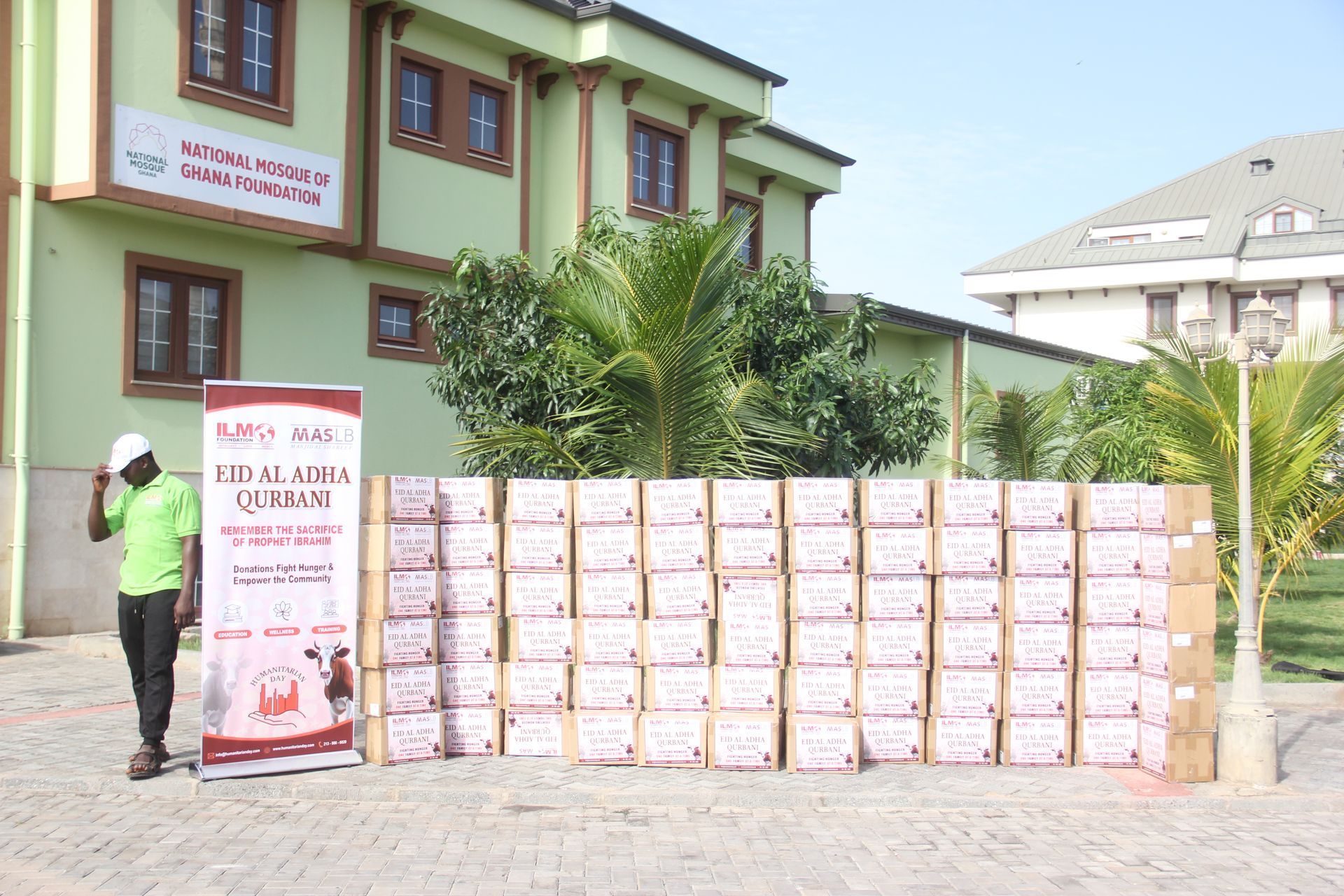
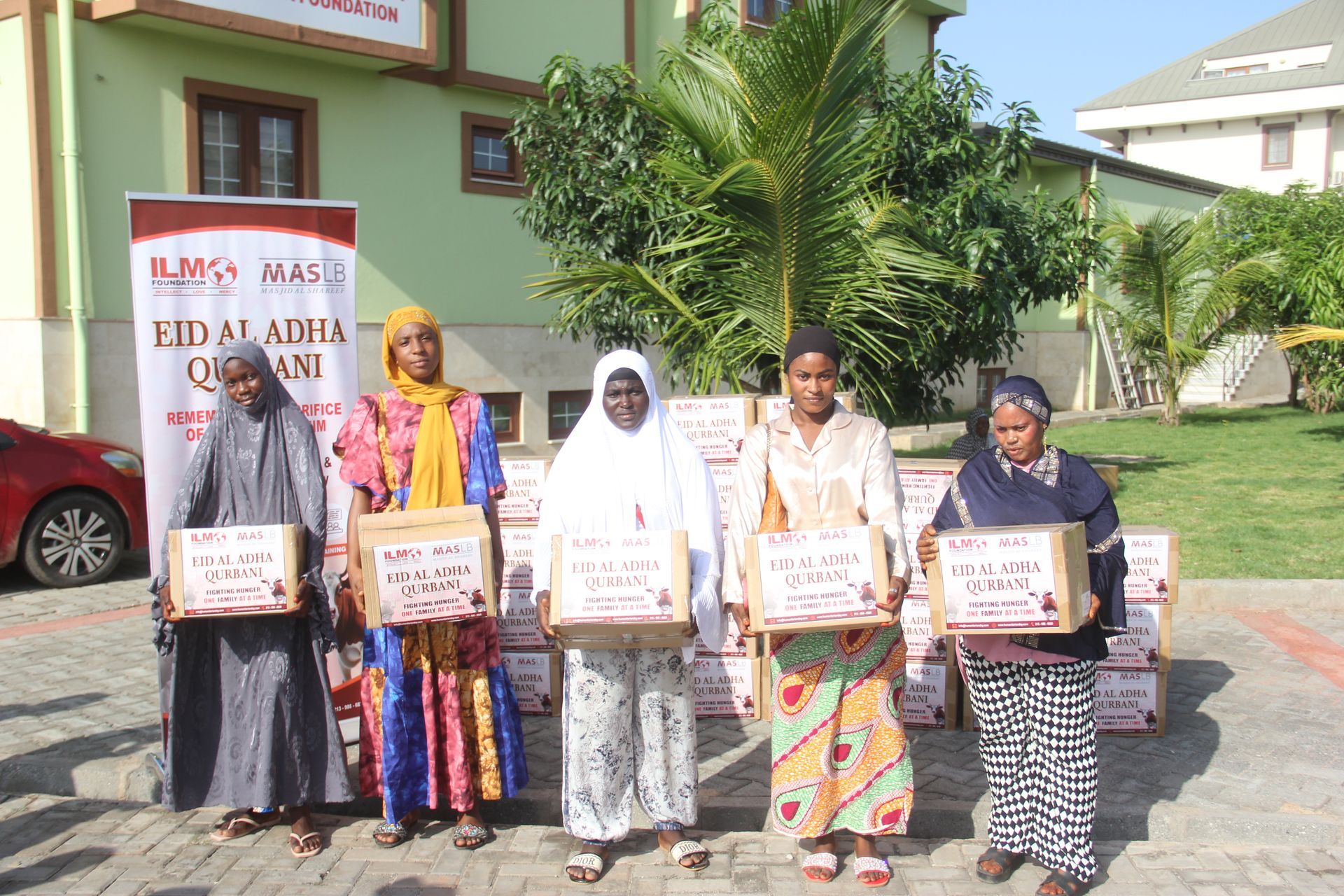
Each year, Muslims around the world come together in a powerful expression of faith, generosity, and remembrance for Eid al-Adha, the Festival of Sacrifice. As ILM Foundation prepares for another impactful Qurbani season, this e-guidebook answers the most important questions while inviting you to be part of something deeply meaningful.


What is Eid al-Adha?

Eid al-Adha is one of the two major Islamic holidays, commemorating the unwavering devotion of the Prophet Ibrahim (Abraham). He was tested by God to sacrifice his son, and in his complete submission, he prepared to do so only for God to replace his son with a ram at the last moment. "And when he reached the age of striving alongside him, he said: 'O my dear son, I see in a dream that I am sacrificing you so look, what do you think?' He said: 'O my father, do what you are commanded. You will find me, if Allah wills, among the steadfast……'  Quran 37:102 - 107


How is Eid al-Adha celebrated?

Eid begins with a special congregational prayer, followed by a sermon. Families gather, meals are shared, and communities come alive with gratitude and generosity. But at the heart of Eid al-Adha is Qurbani, the ritual sacrifice of an animal, symbolizing devotion to God and compassion for others. The importance of the Eid prayer and the sacrifice that follows it is established in the Quran, "Indeed, We have granted you al-Kawthar. So pray to your Lord and sacrifice." Quran 103:1-2


What date is Eid al-Adha 2026?

In 2026, Eid al-Adha is expected to begin on Tuesday, May 26, 2026, depending on the sighting of the moon.


How many days is Eid al-Adha?

Eid al-Adha spans 3 to 4 days, beginning on the 10th day of Dhul Hijjah (the final month of the Islamic calendar) and continuing through the Days of Tashreeq.


When does Eid al-Adha end?

Eid al-Adha concludes on the 13th of Dhul Hijjah, marking the end of the Days of Tashreeq.


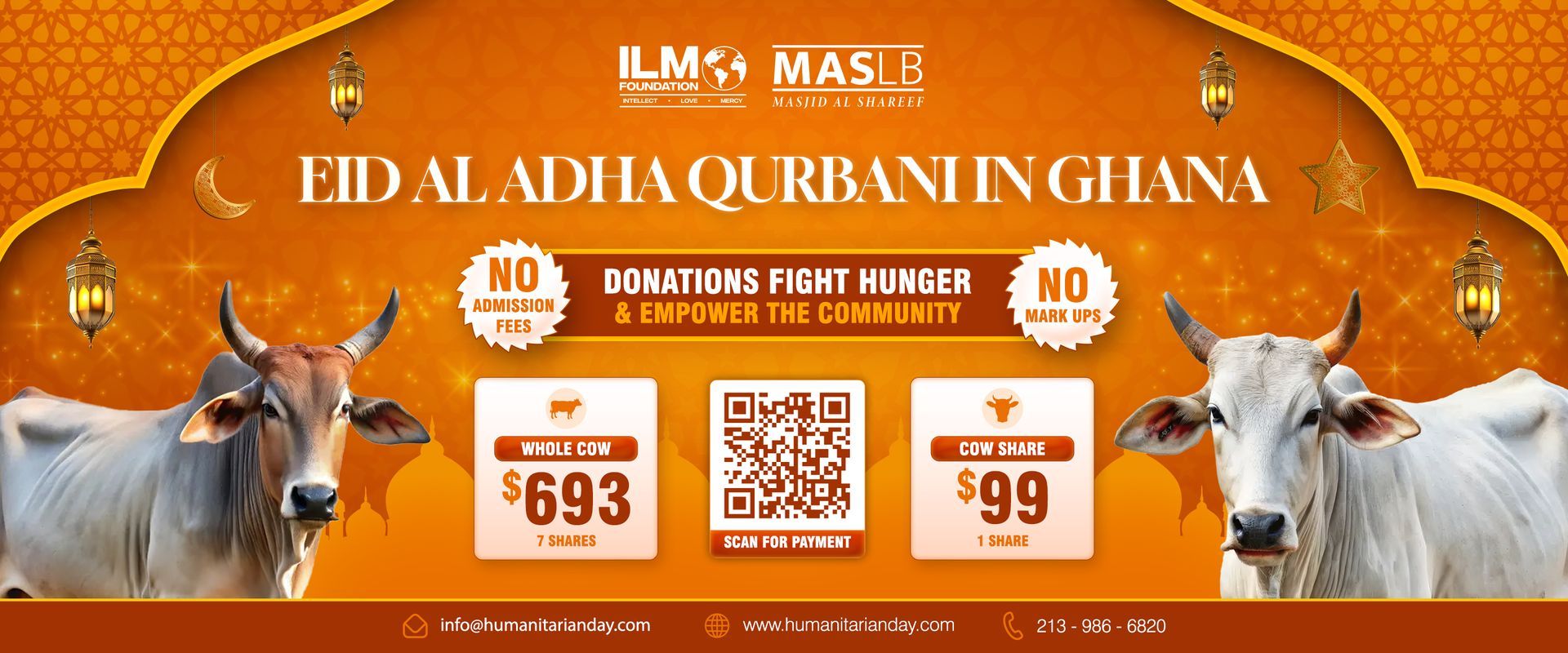
Donate  Here for your Qurbani 

What Are the Days of Tashreeq?

The Days of Tashreeq are the three days following Eid al-Adha, specifically: 11th of Dhul Hijjah, 12th of Dhul Hijjah, and 13th of Dhul Hijjah. These are blessed days of remembrance, gratitude, and community. The Quran refers to these days, "And remember Allah during the numbered days." Quran 2:203


What Happens During the Days of Tashreeq?

The Prophet Muhammad (peace be upon him) described these as: "The days of Tashreeq are days of eating, drinking, and remembrance of Allah." Sahih Muslim


During these days, Muslims:

  • Continue the ritual sacrifice (Qurbani) if not completed on Eid day
  • Engage in Takbeer (repeating phrases glorifying God after prayers)
  • Share meals and strengthen family and community bonds
  • Reflect on faith, gratitude, and obedience


Are These Days Important for Qurbani?

Yes. The Days of Tashreeq are the final window for performing Qurbani. If the sacrifice isn't completed on Eid day (10th Dhul Hijjah), it can still be done during these three days up until sunset on the 13th. The Prophet (peace be upon him) said: "All the days of Tashreeq are days of sacrifice." Hasan - Sunan Ibn Majah


What days are for sacrifice during and after Eid al-Adha 2026?

The days of Qurbani (sacrifice) are:

  • Day 1: 10th Dhul Hijjah (Eid day — May 26, 2026)
  • Day 2: 11th Dhul Hijjah
  • Day 3: 12th Dhul Hijjah
  • Day 4: 13th Dhul Hijjah


Sacrifice must be performed after the Eid prayer and before sunset on the final day. This timing is established by the Prophet (peace be upon him): Narrated by al-Bara’ ibn ‘Azib, the Prophet (peace be upon him) said: "Whoever slaughters before the prayer has only slaughtered for himself, and whoever slaughters after the prayer has completed his sacrifice and has followed the practice of the Muslims."  Sahih al-Bukhari 

Order Qurbani Here

Why do Muslims participate in the Qurbani ritual?

Qurbani is not simply about the act of sacrifice — it is about intention. It reflects:

  • Obedience to God
  • Gratitude for blessings
  • Willingness to give up something valuable
  • Commitment to serving humanity


It is a spiritual reminder that faith must be lived through action. The Quran makes clear that the essence of sacrifice is not the physical act alone, but the consciousness of God (taqwa) behind it: "It is not their meat nor their blood that reaches Allah, but it is your taqwa (God-consciousness) that reaches Him." Quran 22:37 This verse is a powerful reminder that sacrifice is, at its core, an act of the heart.


How do Muslims participate in the Qurbani ritual?

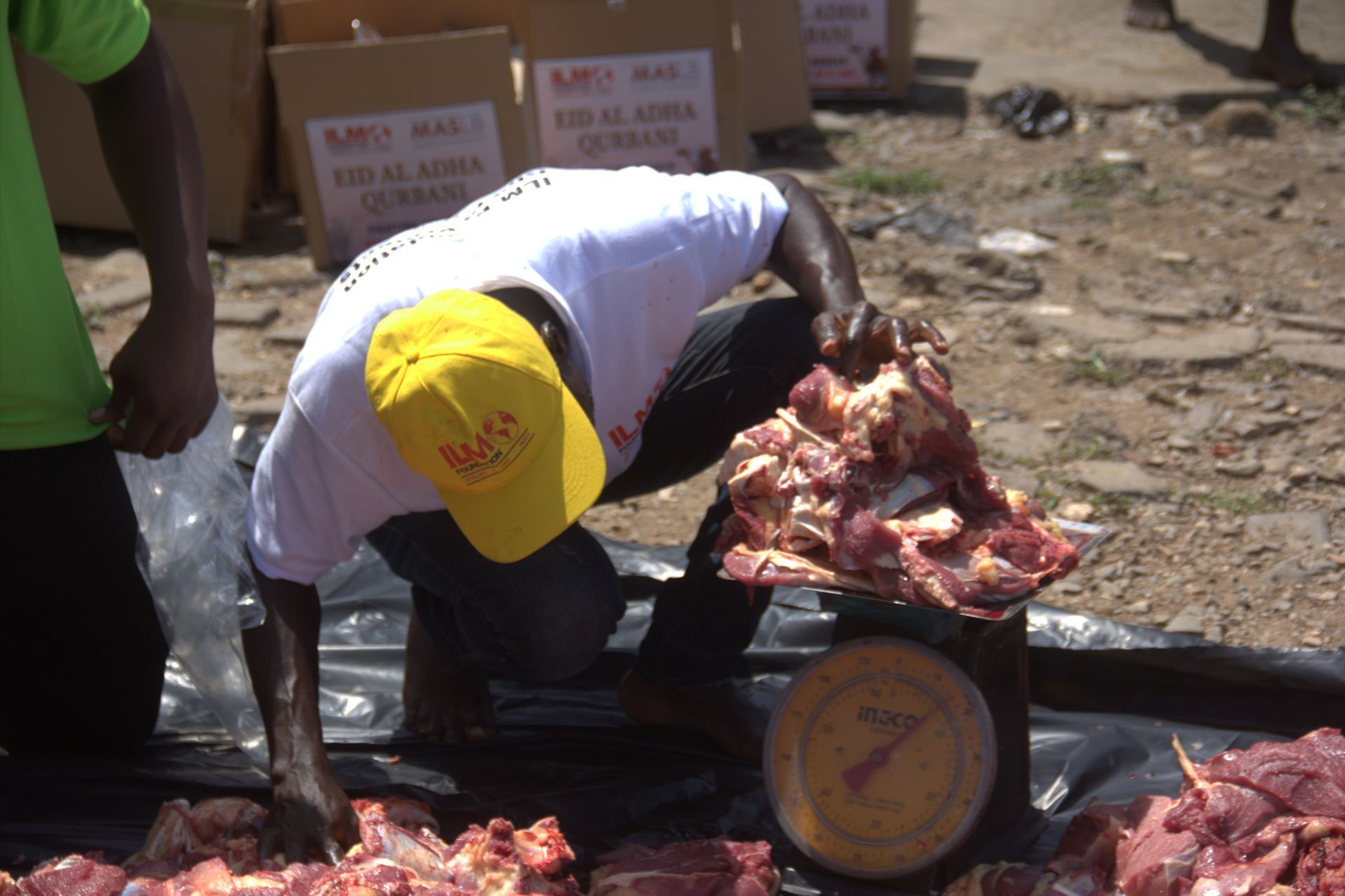
Muslims who are financially able arrange for the sacrifice of an animal such as a sheep, goat, cow, or camel. The meat is then distributed in three parts: for the family, for relatives and friends, and for those in need. The types of acceptable animals are mentioned in the Quran 6:142-143 "Eight in pairs: of sheep, two; and of goats, two... and of camels, two; and of cattle".


What is a Qurbani Share?

A Qurbani share refers to a portion in a larger animal (such as a cow or camel), which can be divided into up to seven shares. Each share counts as one person's Qurbani. This is supported by the following hadith: "We sacrificed with the Messenger of Allah (peace be upon him) in the year of Hudaybiyyah: a camel on behalf of seven, and a cow on behalf of seven." Sahih Muslim

When you donate through ILM Foundation

  • Your Qurbani is carried out ethically and according to Islamic guidelines
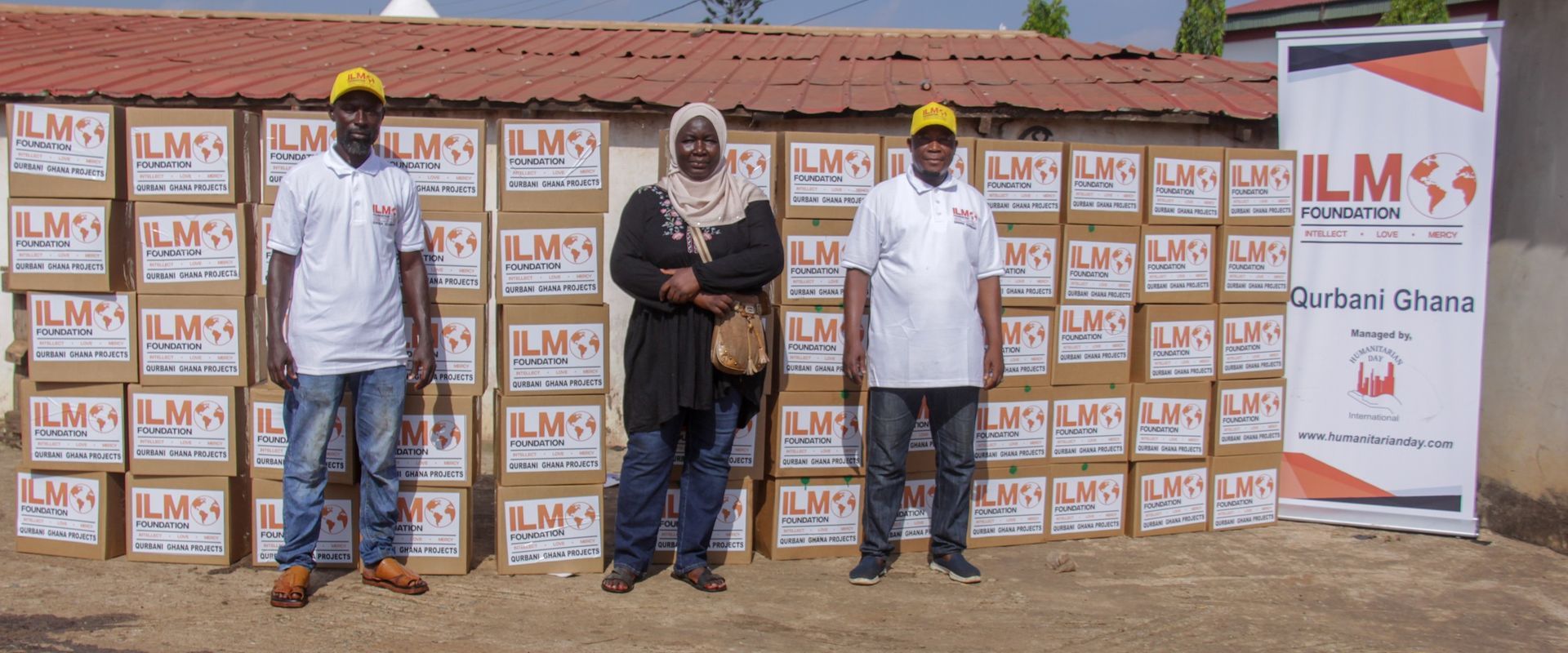
  • Meat is distributed to vulnerable families who rarely have access to fresh protein
  • You support a trusted organization with a long-standing commitment to humanitarian service


The spirit of Qurbani is inseparable from compassion and generosity toward those in need.

Narrated by Abu Hurayrah: The Prophet (peace be upon him) said: "He is not a believer whose stomach is filled while his neighbor goes hungry." Sahih al-Bukhari


Through initiatives like Humanitarian Day, ILM Foundation has consistently demonstrated its dedication to serving humanity with integrity and excellence.


Donate Here - Fulfill your Qurbani with ILM Foundation

Orange

At ILM Foundation, we believe in nourishing bodies and minds. Together, we can create an interconnected community where everyone thrives!

By ILM Foundation April 29, 2026
The Profound Outcome of the Total Submission Qurbani is an act of worship of sacrificing an animal most commonly like a cow, sheep or goat; re-enacting the Sacrifice of Prophet Ibrahim (as) and his Son Prophet Ishmail (as). Eid Al Adha is referred to as Eid Al Akbar (The Big Celebration). ILM Foundation’s aim in this blog is to share some principles associated with this rich tradition and the deep blessings attached to it. Qurbani (قُرْبَانِ) means to draw near. Prophet Ibrahim and his son demonstrate a Divine Master’s Class chronicled in the Quran of Qurbani in practice. Qurbani in the Quran فَلَمَّا بَلَغَ مَعَهُ ٱلسَّعْىَ قَالَ يَـٰبُنَىَّ إِنِّىٓ أَرَىٰ فِى ٱلْمَنَامِ أَنِّىٓ أَذْبَحُكَ فَٱنظُرْ مَاذَا تَرَىٰ ۚ قَالَ يَـٰٓأَبَتِ ٱفْعَلْ مَا تُؤْمَرُ ۖ سَتَجِدُنِىٓ إِن شَآءَ ٱللَّهُ مِنَ ٱلصَّـٰبِرِينَ And when he reached the age of striving alongside him, he said: 'My son I see in a dream that I am slaughtering you. So, tell me, what do you see?' He said: 'My father do what you have been commanded. You will find me, if Allah wills, among the steadfast."
By Naim Shah Jr April 27, 2026
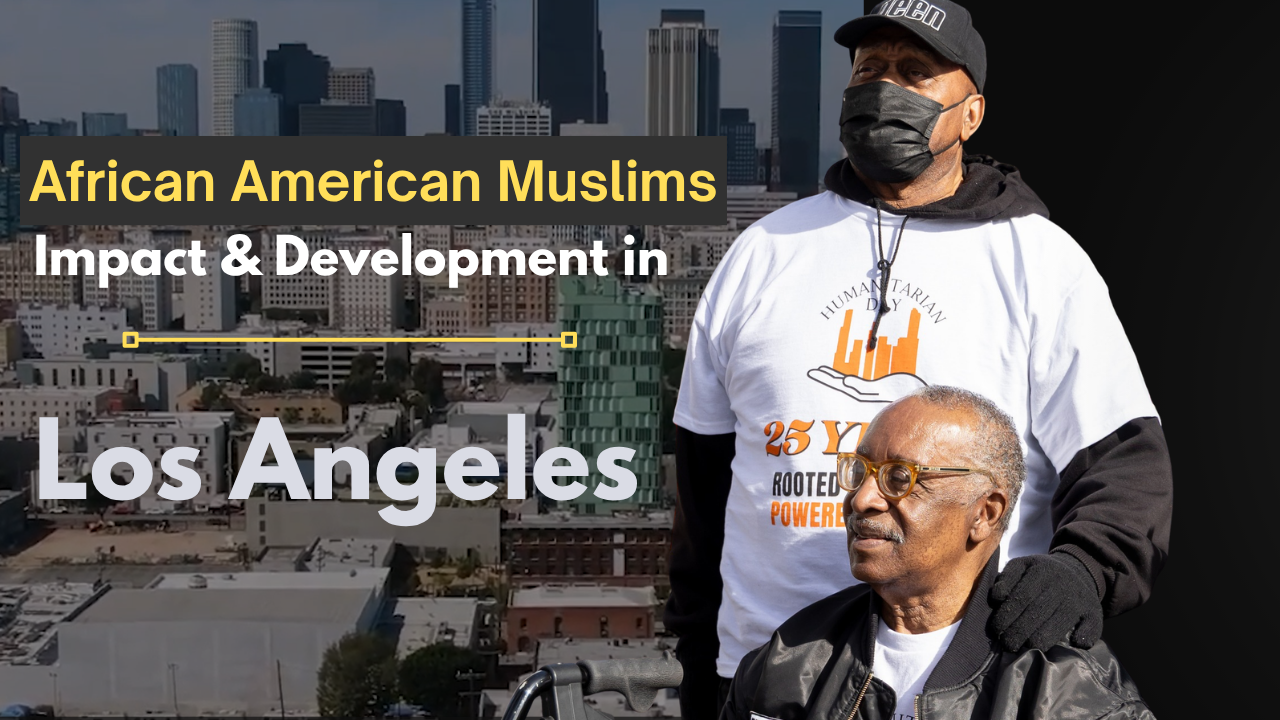
Honoring Imam Abu Ishaq Abdul Hafiz Life of Service “The mission is Greater than the Discomfort.” There are leaders who speak. There are leaders who act. And then there are those rare individuals who quietly dedicate their entire lives to serving humanity often in places the world forgets. Today, we honor one such servant of God, Imam Abu Ishaq Abdul Hafiz, recipient of the 2026 Community Service Award from the Southern California Shura Council. This is a recognition of a lifetime spent walking into the hardest spaces with faith, dignity, and unwavering compassion, answering the call in spaces few want to go. But to call this simply an “award” would be an understatement. He is fulling daily the purpose of which the Quran says, “And I did not create the jinn and mankind except to worship Me. (51.56) Born Albert Eugene Simms Jr. in Gary, Ind., Abdul-Hafiz discovered Islam during his junior year at Tuskegee Institute in Alabama. “One of my African history professors was a Christian, . . . teaching us the basics of Islam in Africa,” Abdul-Hafiz said. “He said they believed in Jesus as a prophet of God, not God incarnate, and I thought, ‘Wow. All my life I’ve been thinking that. . . . This makes sense to me.’ ” After studying several religions, Abdul-Hafiz took his Islamic oath of faith July 7, 1971, and adopted his Arabic name.
By Naim Shah Jr April 23, 2026
What We Learned from Humanitarian Day 2026: From Service to Lasting Impact For over two decades, Humanitarian Day has been a commitment to service meeting people where they are with dignity and compassion. In 2026, that mission took on deeper meaning as we continued our work at Gladys Park in the heart of Los Angeles’ Skid Row. This year we experienced a moment of clarity. Skid Row remains one of the most concentrated areas of homelessness in the United States. According to the Los Angeles Homeless Services Authority, more than 75,000 people experience homelessness across Los Angeles County, with thousands living unsheltered in neighborhoods like Skid Row. Many face overlapping challenges, including long-term unemployment, lack of identification, and limited access to healthcare.  Research also shows that a significant portion of the unhoused population lives with chronic physical or mental health conditions barriers that make pathways out of homelessness even more complex. And yet, within this reality, there are pockets of transformation.
Show More