

Beyond Homelessness: Restoring the Skid Row Community

ILM Foundation • November 22, 2026

Listening to the People Closest to the Problem

By ILM Foundation | Humanitarian Day 2027 Series — Part Two


What does it take to restore a neighborhood?

Is it simply removing tents, cleaning sidewalks, increasing patrols, or relocating people? Is it providing more services? Is it building more housing? Each of these may be part of a larger response, but none alone can rebuild a community.  A neighborhood is more than its buildings and streets. It is the people who live there, the relationships they form, the standards they uphold, the children they protect, and the shared belief that tomorrow can be better than today. As ILM Foundation continues preparing for Humanitarian Day 2027, we are increasingly convinced that any meaningful effort to improve Skid Row must begin by listening to the people who know the neighborhood best.


Listening before prescribing solutions:

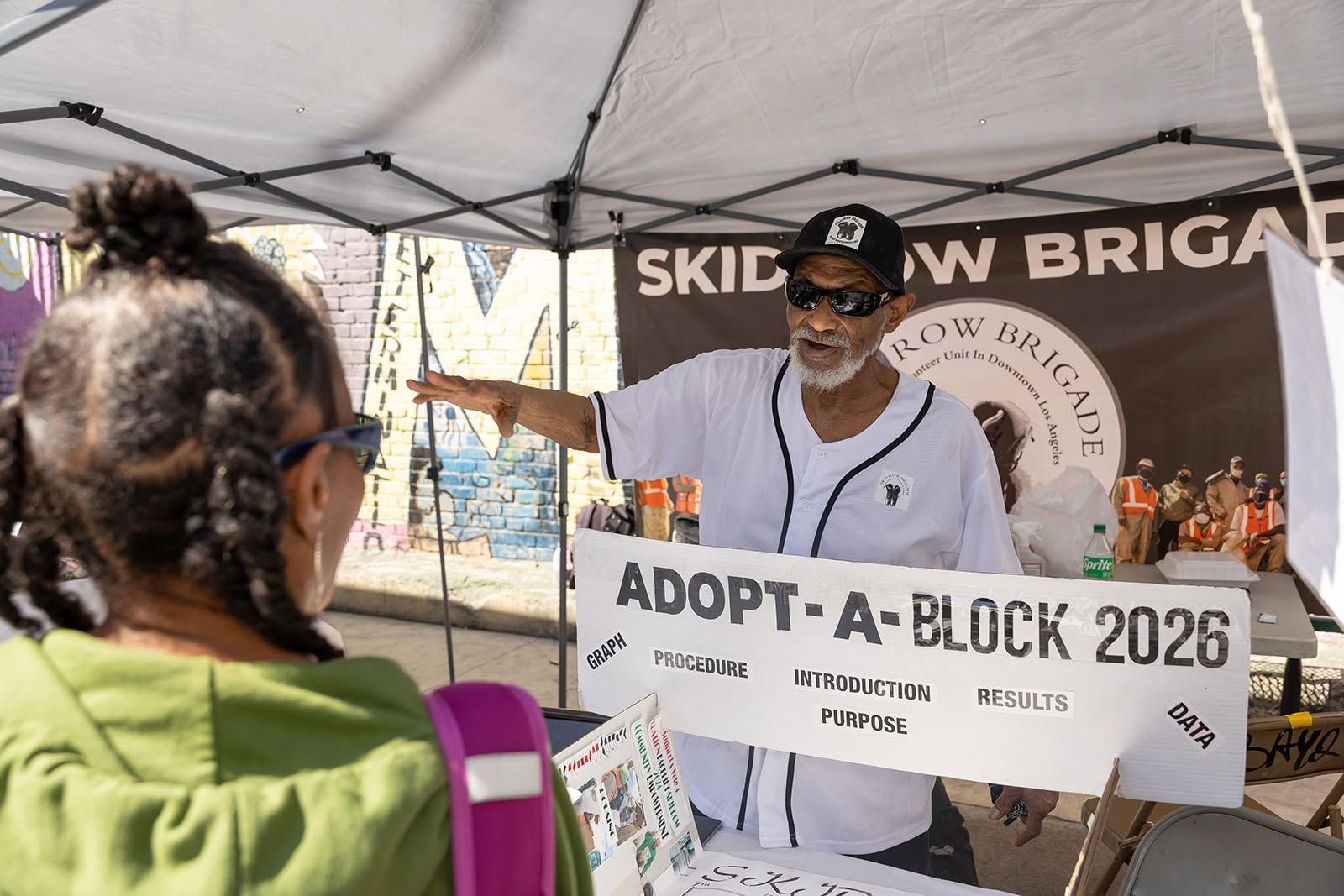
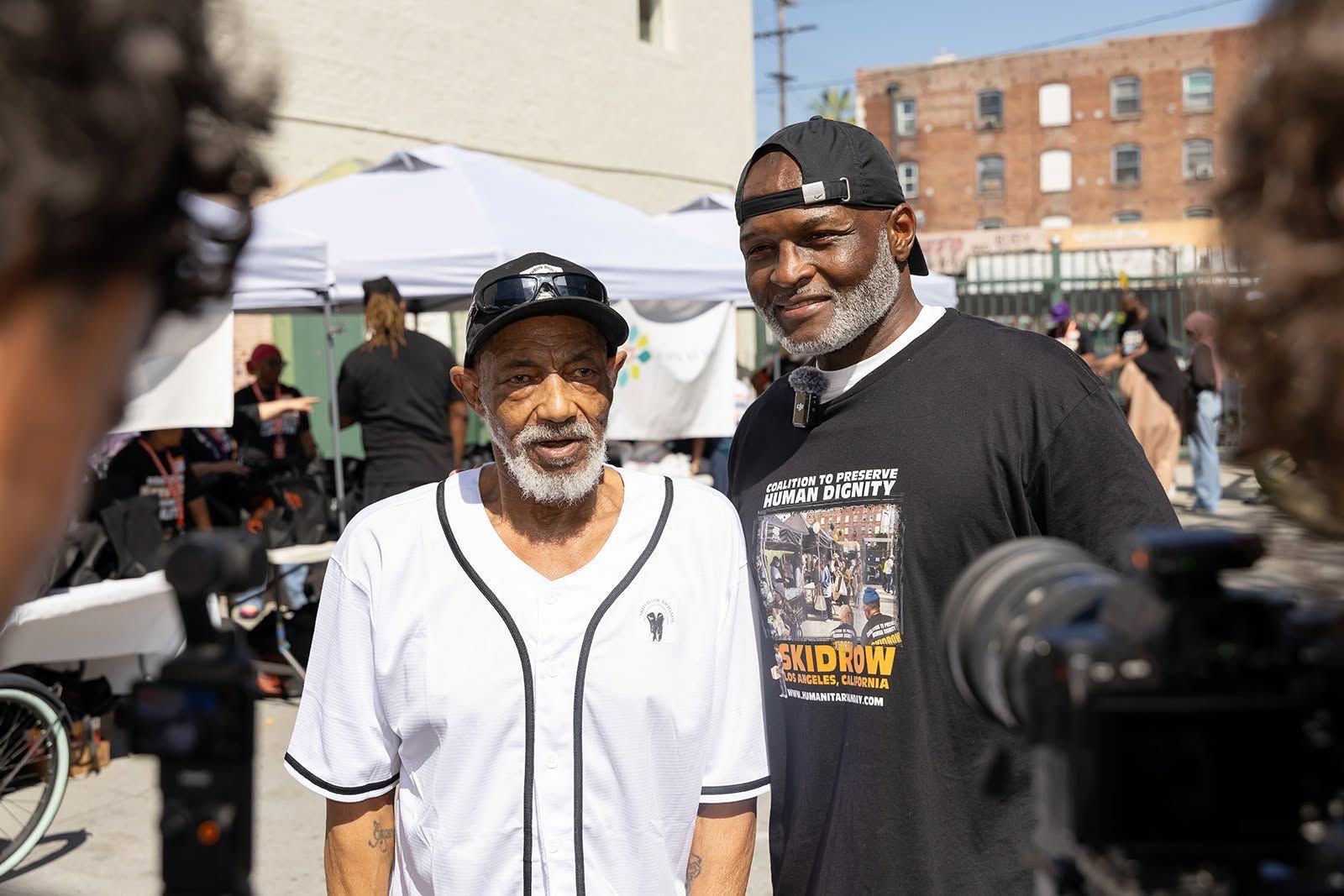
On October 27, 2026, ILM representatives met with Manuel OG Compito and his wife Sister Lynne Price-Compito, founding directors of Skidrow Brigade Inc. The conversation offered an important perspective on the challenges and possibilities facing Skid Row. They described a vision that is both straightforward and ambitious:


“Building a clean, safe, healthy Neighborhood and Community where children and families can thrive.”

The organization's motto is equally direct: “WE GET UP & GET BUSY.”


These words communicate more than a desire for cleaner streets. They express a belief that people who live in and care about a neighborhood should have an active role in shaping its future. OG spoke about a community at a crossroads. There are residents and advocates who have committed years of effort to improving conditions, often with limited resources and without the sustained support needed to maintain momentum. Their work is not always visible to the broader public, but it represents a valuable source of local knowledge, relationships, and commitment. Their message deserves to be heard: lasting change cannot be built exclusively from the outside. It must include the people who experience the neighborhood every day.


Community Standards are part of Community Restoration

One of the most meaningful aspects of the conversation was the emphasis on shared standards of conduct, particularly around children and families. Skidrow Brigade advocates use the phrase “KIDS WALKING” as a community reminder. When children are nearby, people are encouraged to pause inappropriate behavior and recognize that young people and families are moving through the neighborhood.


It is a simple expression, but it communicates an important principle: children deserve safe environments, and everyone has a role in helping create them. Community standards are not a substitute for public services, housing, or professional support. Nor should they be used to shame or exclude people who are struggling. Rather, they can help establish shared expectations about respect, safety, cleanliness, and responsibility. A healthy neighborhood must make room for compassion and accountability. It must protect vulnerable people while affirming that everyone has a part to play in the common good.


From being served to helping shape the solution

Too often, conversations about homelessness focus on what institutions, agencies, and outside organizations will do to or for a neighborhood. Less attention is given to what residents and local advocates can help lead. This distinction matters.


People who live in a community often know which corners need attention, which families need support, where children walk, which services are accessible, and which interventions have failed in the past. They also know the individuals who have earned trust and those who have continued showing up when public attention has moved elsewhere. Community-led solutions recognize this knowledge as an asset.


One proposal discussed during our meeting was an Adopt-A-Block–Skidrow Project. The concept would support volunteer block captains through modest stipends and practical resources, enabling them to coordinate neighborhood cleanups, encourage positive community standards, identify local needs, and help residents participate in improving their surroundings.


The proposal is not a finished program, and it will require thoughtful planning, community input, funding, clear responsibilities, and partnerships. But its underlying idea is worth serious consideration: people should have opportunities to contribute to the restoration of the place they call home. A block captain is not expected to solve homelessness, replace public agencies, or take on responsibilities beyond their training. The role would be to help organize constructive participation, strengthen neighborhood relationships, and connect people with appropriate resources.


Why participation matters

There is a deeper human dimension to this approach. When people are invited to contribute, they are recognized as more than recipients of assistance. They become participants in a shared effort. A cleanup can become an opportunity to build relationships. A block meeting can become a place to identify needs. A small responsibility can help restore a sense of purpose and belonging.

Participation is not a replacement for professional mental health care, housing assistance, or employment services. But meaningful connection and opportunities to contribute can complement those supports and strengthen the social fabric of a neighborhood.


For people experiencing homelessness, the ability to make a positive contribution should not depend on first securing permanent housing. People deserve dignity and opportunities to participate now. For housed residents and businesses, working alongside neighbors can also help replace frustration and isolation with practical cooperation.


Safety, cleanliness, and compassion belong together

A clean and safe neighborhood is not an unreasonable expectation. Nor is it unreasonable for people experiencing homelessness to expect respect, access to services, and protection from harm. These goals should not be framed as competing interests.

Public spaces should be accessible. Children should be able to walk through their neighborhoods safely. Businesses should be able to operate. Residents should be able to maintain their homes and surroundings. And people without housing should not be treated as disposable or simply pushed from one block to another.


The work requires coordination among residents, grassroots organizations, service providers, businesses, faith communities, and public agencies. It also requires listening to the people who are most directly affected by decisions. We should ask not only what resources are being spent, but whether those resources are producing safer blocks, stronger relationships, better access to services, and real opportunities for people to move forward.


A Role for ILM Foundation and Humanitarian Day

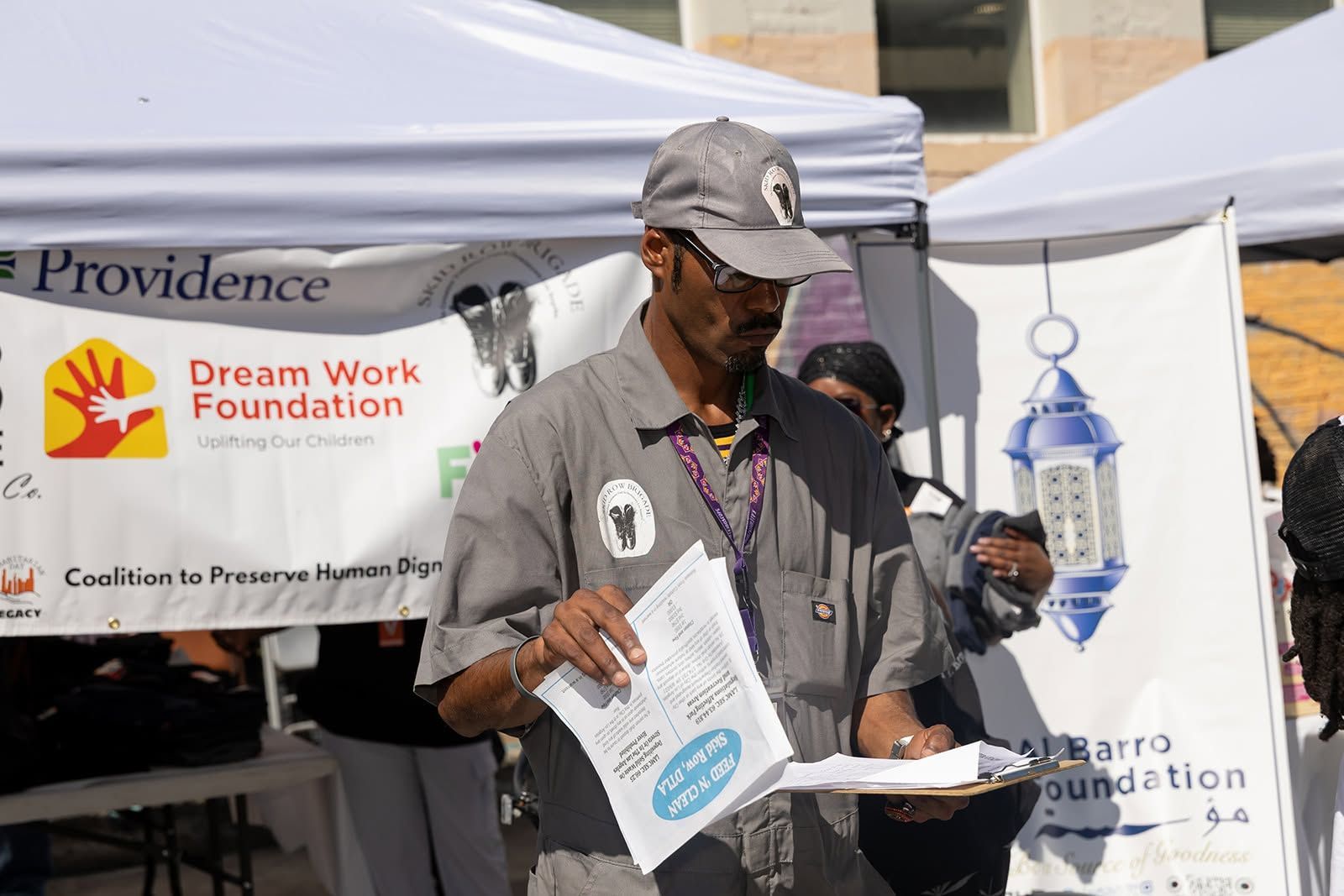
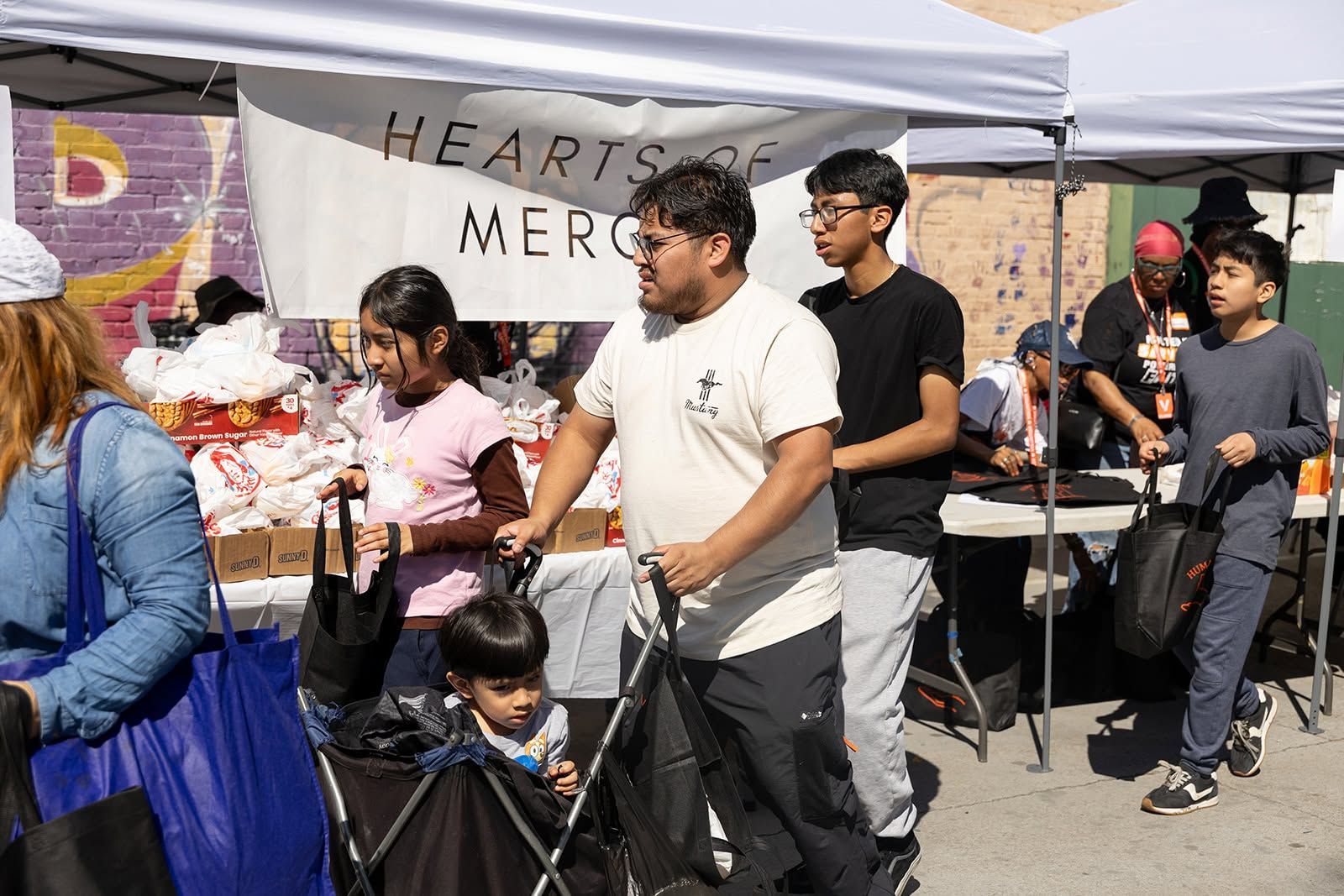
ILM Foundation's Humanitarian Day tradition has always been rooted in service. Since 1998, our work with unhoused communities has reminded us that immediate assistance can make a meaningful difference. Humanitarian Day, established in 2001, brings volunteers and partners together to provide practical support and affirm the dignity of people who are too often overlooked.


But the conversation with OG and Skidrow Brigade challenges us to think beyond the annual event.

What if our service also helped strengthen community-led efforts throughout the year? What if Humanitarian Day became a platform for connecting residents, grassroots advocates, local organizations, donors, and volunteers around practical neighborhood priorities?


We do not presume to arrive with all the answers. We believe the next step is continued dialogue: listening, learning, identifying shared priorities, and exploring what a responsible partnership could look like.


The proposed Adopt-A-Block concept is one possible starting point. Other opportunities may include neighborhood cleanups, resource connections, youth and family support, employment pathways, health outreach, and volunteer partnerships. The important thing is that these efforts be developed with the community, not simply designed elsewhere and delivered to it.


The people closest to the problem must help shape the future


Skid Row is not merely a location associated with homelessness. It is a neighborhood with people, history, relationships, challenges, and advocates who care deeply about what happens next.


OG's words—“WE GET UP & GET BUSY”—offer a reminder that restoration requires participation. It requires people willing to show up, organize, cooperate, and keep working even when progress is slow.


The future of Skid Row should not be determined only by the headlines written about it or the policies created far from its streets. The people who live there and work there must have a meaningful voice in shaping that future.

The message from Skid Row's grassroots advocates is clear: meaningful change requires more than outside assistance. It requires investment in people, opportunities for participation, and a commitment to rebuilding community.


In Part Three, we explore how ILM Foundation and its partners can help turn these principles into action through Humanitarian Day 2027.


Humanitarian Day 2027 — Sunday, February 21, 2027


Orange

At ILM Foundation, we believe in nourishing bodies and minds. Together, we can create an interconnected community where everyone thrives!

By ILM Foundation • November 16, 2026
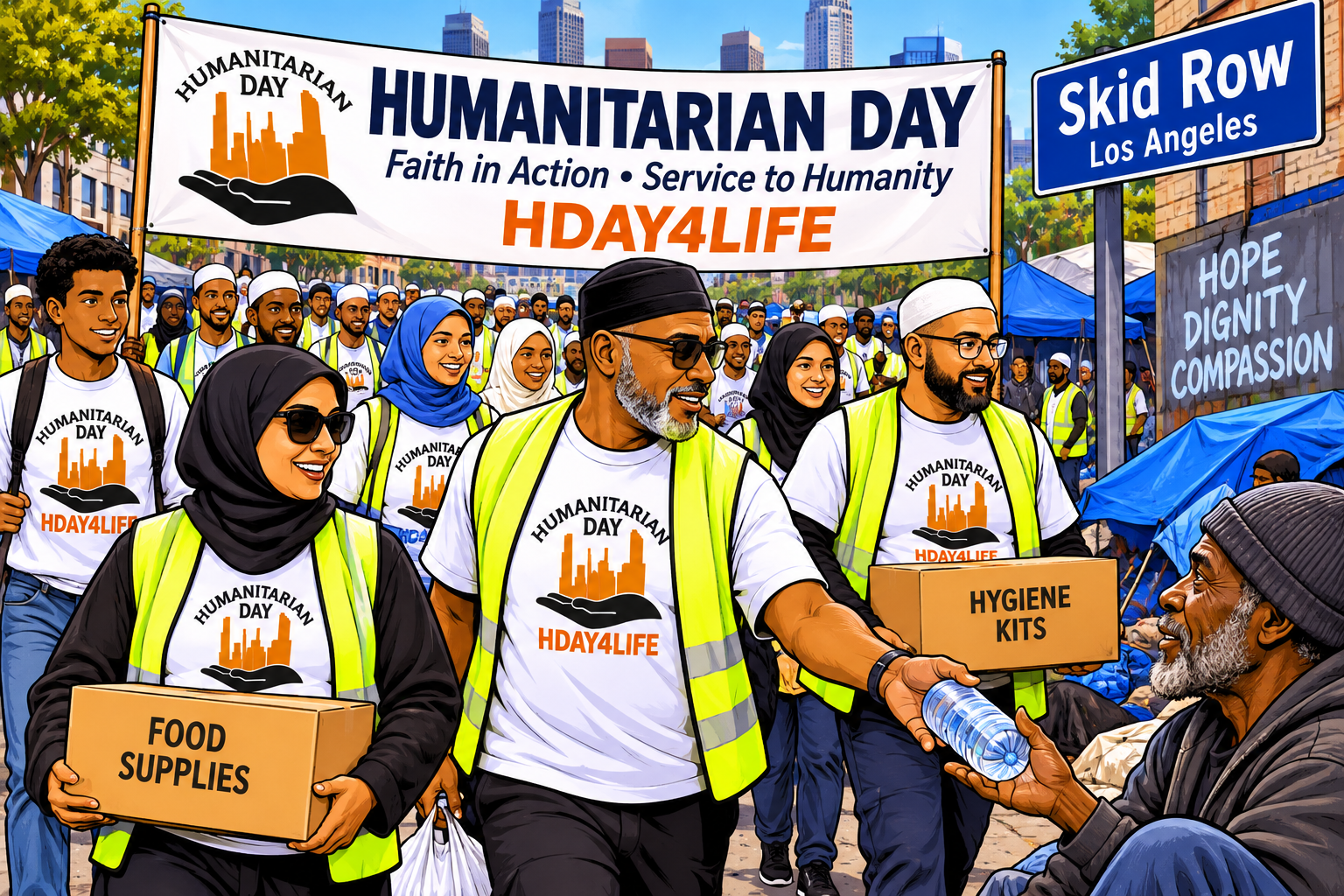
Humanitarian Day Legacy DIGNITY - COMPASSION - RESPONSIBILITY
By ILM Foundation • November 2, 2026
Beyond the Streets: Understanding the Crisis
By ILM Foundation • October 29, 2026
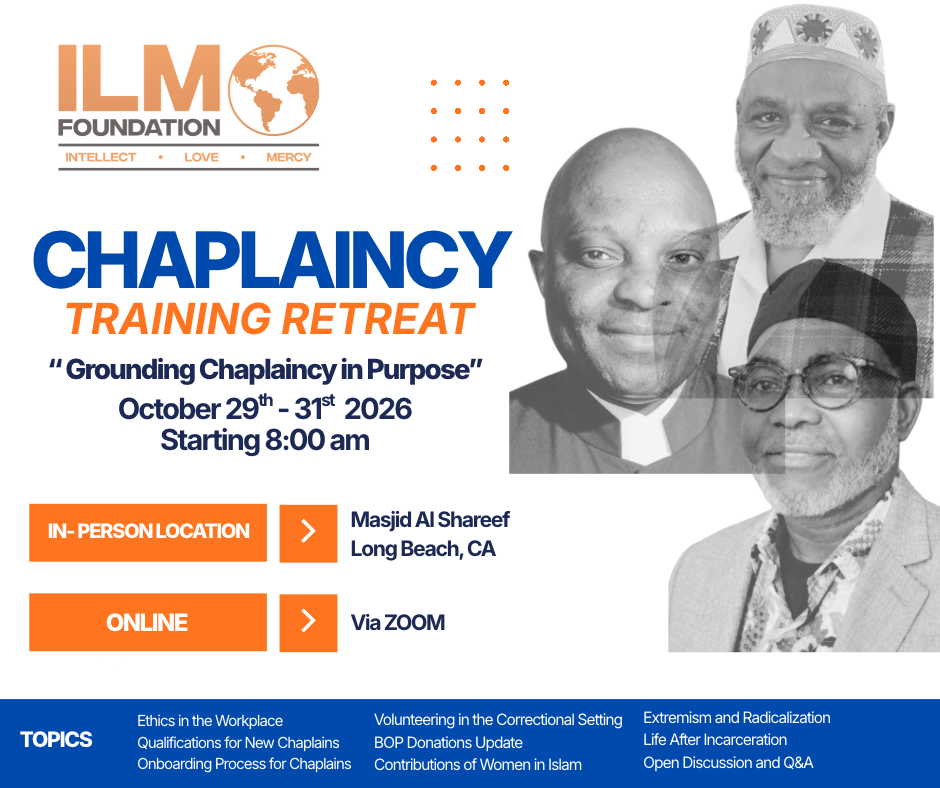
Grounding Chaplaincy in Purposefulness: Strengthening the Role of Muslim Chaplains in America ILM Foundation’s Annual Chaplaincy Training Retreat October 29–31, 2026 | Masjid Al Shareef, Long Beach, California Muslim chaplaincy is more than a professional responsibility. It is a commitment to serve humanity through spiritual care, compassionate guidance, ethical leadership, and the protection of religious dignity. A Calling to Serve Beyond the Mosque Across the United States, Muslim chaplains are making important contributions in places where spiritual care, emotional support, and religious guidance can have a profound impact on people's lives. From correctional institutions and military installations to hospitals and other public-serving institutions, chaplains help individuals navigate some of life's most challenging circumstances. Their work often takes place away from the public spotlight. They serve people experiencing illness, isolation, personal crises, family separation, incarceration, grief, and uncertainty. They help individuals maintain a connection to their faith, find meaning during difficult moments, and make decisions grounded in their spiritual and ethical values. Muslim chaplains also contribute to the broader American institutional landscape by helping ensure that Muslim religious needs are understood and respected. At the federal, state, and county levels, their work can support religious accommodation, interfaith understanding, institutional well-being, and the dignity of people from diverse backgrounds. In these settings, chaplaincy is not simply about providing religious services. It is about meeting people where they are, understanding their circumstances, and offering appropriate spiritual care with wisdom, professionalism, and compassion. Why Purposefulness Matters in Chaplaincy The responsibilities of a chaplain demand more than religious knowledge alone. They require the ability to apply that knowledge appropriately within complex professional environments. This is why ILM Foundation's 2026 Chaplaincy Training Retreat is centered on the theme: “Grounding Chaplaincy in Purposefulness.” Purposefulness invites chaplains to reflect on the deeper meaning of their service. Why do we serve? Whom are we called to serve? How can our presence contribute to healing, accountability, spiritual growth, and human dignity? These questions are especially important for Muslim chaplains working in institutions where religious needs intersect with professional policies, legal obligations, ethical responsibilities, and the diverse experiences of the people they serve. Ongoing training and reflection help chaplains strengthen their ability to navigate these responsibilities with integrity and confidence. The ILM Foundation Annual Muslim Chaplaincy Training Retreat ILM Foundation will host its annual Chaplaincy Training Retreat from October 29–31, 2026, at the historic Masjid Al Shareef, located at 2104 Orange Avenue, Long Beach, California 90806. The retreat brings together chaplains, religious leaders, community volunteers, and others interested in strengthening their understanding of chaplaincy and its contribution to society. By providing a setting for learning, reflection, professional development, and discussion, ILM Foundation seeks to encourage a thoughtful and purposeful approach to Muslim chaplaincy. The retreat's program addresses practical and ethical questions facing chaplains while recognizing the importance of spiritual grounding, professional preparation, and collaboration across religious traditions. Featured Topics The three-day program includes discussions and presentations on: Spirituality in Chaplaincy: Exploring the spiritual foundation and purpose of pastoral service Ethics in the Work Environment: Examining the importance of integrity, professional conduct, and ethical decision-making. New Qualifications for Chaplains: Considering evolving qualifications and professional expectations for chaplaincy positions. Volunteering in Correctional Settings: Understanding the responsibilities and opportunities associated with providing spiritual support in correctional institutions. Accommodation of Jewish Holidays: Learning about religious accommodation and the needs of different faith communities. Contributions of Women in Islam: Exploring women's contributions and their place within Muslim religious and community life. Extremism and Radicalization: Engaging with an important topic relevant to institutional and community responsibilities. ILM's Chaplaincy Onboarding Process: Examining preparation and organizational support for chaplaincy service. The program also includes Quranic recitation, reflection, concluding discussions, and opportunities for questions and answers. An Experienced and Diverse Group of Speakers The retreat features Muslim scholars, chaplains, community leaders, and an interfaith contributor whose experience spans religious service, institutional chaplaincy, education, and community leadership. Featured speakers include: Imam Dr. Mustapha Kulungu Imam Dr. Zubair Yousif I mam Abu Ishaq Hafiz Imam Ayub Haroun Imam Fateen Saifullah Imam Mohammad Zakaria Imam Naim Shah, Jr. Sister Sabah Muhammad-Tahir Sister Renee Mustafa Rabbi Abraham Richter Dr. Nayawiyyah Muhammad Imam Naim-Shareef Shah The Importance of Preparing the Next Generation of Chaplains As the responsibilities of chaplains continue to intersect with increasingly complex institutional and community needs, preparation becomes essential. Aspiring chaplains, experienced practitioners, religious leaders, and volunteers all benefit from opportunities to examine their methods, learn from colleagues, and develop a deeper understanding of the environments in which they serve. Effective preparation includes more than theological knowledge. It involves learning how to communicate across differences, respect confidentiality, recognize professional boundaries, understand institutional requirements, respond appropriately to crises, and work collaboratively with other professionals. For Muslim chaplains, this preparation also includes representing Islam through conduct that reflects compassion, justice, service, and respect for human dignity. The annual retreat offers a space to engage these responsibilities collectively and to encourage a culture of continued learning. ILM Foundation: Faith in Action Through Service The work of chaplaincy reflects a broader principle that guides meaningful community service: faith should inspire action. Through its annual Chaplaincy Training Retreat, ILM Foundation provides a forum for Muslim chaplains and community members to reflect on how religious commitment can translate into responsible, compassionate, and professionally grounded service. Hosting the retreat at Masjid Al Shareef also connects this work to the mosque's role as a place of worship, learning, reflection, and community engagement. By encouraging dialogue, training, and professional development, ILM Foundation seeks to strengthen the people who serve others during moments when spiritual guidance and human connection matter most. The retreat is an opportunity to reaffirm that chaplaincy is not merely a title or position. It is a responsibility that calls for knowledge, character, preparation, and a clear sense of purpose. Grounding the Future of Chaplaincy in Purpose The contributions of Muslim chaplains across America's correctional, military, healthcare, and other institutional settings deserve recognition and continued support. Their work demonstrates how spiritual care can contribute to individual well-being, religious inclusion, ethical reflection, and the preservation of human dignity. As ILM Foundation convenes its 2026 Annual Chaplaincy Training Retreat, the central invitation is to return to the purpose behind the work: serving people with sincerity, strengthening professional competence, and ensuring that spiritual care remains grounded in responsibility and compassion. When chaplaincy is grounded in purpose, service becomes more than a duty. It becomes a meaningful contribution to humanity. 2026 ILM Foundation Chaplaincy Training Retreat Theme: Grounding Chaplaincy in Purposefulness Dates: October 29–31, 2026 Location: Masjid Al Shareef, 2104 Orange Avenue, Long Beach, CA 90806 Retreat Program: Click here to view Format: In person, with online participation via Zoom For information: ilmfoundationoflosangeles@gmail.com Hosted by: ILM Foundation Interested in Muslim chaplaincy, professional development, or volunteering in correctional settings? Contact ILM Foundation to learn more about its chaplaincy initiatives and training o pportunities.

Show More